


Quick Answer
Before consolidating debt with a secured loan in West Sussex, check the total borrowing cost, all fees, repayment affordability, alternative debt solutions, and whether securing debt against your home is genuinely necessary. Lower monthly payments can sometimes mean paying significantly more over the full loan term. Because your property is used as security, missed repayments could put your home at risk. For many Brighton & Hove and West Sussex homeowners, regulated independent advice is often the most important first step before proceeding.
Your home may be repossessed if you do not keep up repayments on a mortgage or any other debt secured on it.
Introduction
For many homeowners across West Sussex and nearby Brighton & Hove, juggling credit cards, personal loans and rising household costs can make debt consolidation through a secured loan look like a practical reset.
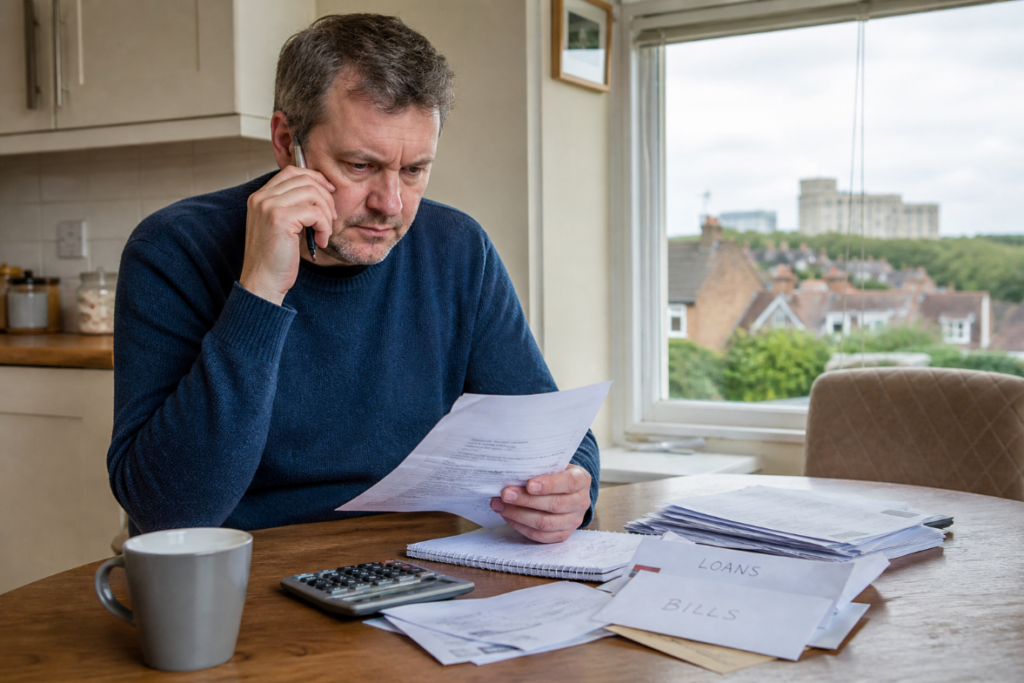
Lower monthly payments can seem appealing, particularly as the average UK credit card purchase rate remains above 35% APR according to the latest Bank of England lending data (March 2026). Yet securing debt against a property, where average West Sussex house values remain significant according to recent UK House Price Index figures (early 2026), carries real long term implications.
The decision deserves careful scrutiny, especially in higher value local markets such as Brighton & Hove. This checklist highlights the essential checks before proceeding.
Important: Consolidating unsecured debt into borrowing secured against your home can increase the total amount repaid and your home may be repossessed if repayments are not maintained.
What Is a Secured Loan for Debt Consolidation?
A secured loan is a form of borrowing linked to an asset you own, most commonly your home. For West Sussex homeowners, including those in higher value areas such as Brighton & Hove, it is often used to combine several unsecured debts such as credit cards, personal loans or overdrafts into one larger repayment.
Because the lender has security against your property, rates can sometimes start from around 5.9% to 14.9% APR for stronger applicants in early 2026, though many borrowers are offered more depending on credit profile and loan-to-value ratio. (Secured Loan Rates UK, 2026)
The trade-off is significant. If repayments are missed and the situation cannot be resolved, the lender may ultimately seek repossession. That risk is what makes this very different from unsecured borrowing.
Unlike unsecured loans, secured lending often offers longer repayment terms and potentially lower monthly costs because the lender’s risk is reduced. This can improve eligibility for homeowners who may struggle to access competitive unsecured credit.
However, lower monthly payments can sometimes mask a higher total borrowing cost if the debt is stretched over many years. For homeowners across West Sussex, where property values tend to be comparatively strong, the decision is rarely just about affordability. It is about weighing short term breathing space against long term security.
today
Find out how much you could borrow in minutes. No credit check, no commitment – just clear, honest mortgage advice.
Understanding Your Home Equity in West Sussex
Home equity is simply the difference between what your property is currently worth and what remains on your mortgage. If a Brighton & Hove home is valued at £403,000 and the outstanding mortgage balance is £245,000, the available equity is £180,000.
In simple terms: Property Value minus Mortgage Balance = Equity.
A quick estimate can often be checked through Zoopla or Rightmove, although lenders will usually rely on their own valuation before approving any secured borrowing.
This matters more in West Sussex, where South East property values remain comparatively high. The average property price across the South East was around £376,684 in the latest UK House Price Index (February 2026), which can increase borrowing capacity for some homeowners.
That said, borrowing against rising equity should be approached cautiously. Extending repayment terms or releasing more than needed may gradually reduce your ownership stake, limiting future remortgage flexibility and potentially affecting long term financial security, particularly in premium local markets such as Brighton & Hove.
Example: Lower Monthly Payments Do Not Always Mean Lower Overall Cost
A practical comparison helps show why total repayment matters just as much as monthly affordability.
Option 1: £25,000 Unsecured Debt Over 5 Years
Assuming a representative rate of 11.9% APR, monthly repayments would be around £550 to £560, with total repayment of approximately £33,000 to £33,600.
Option 2: £25,000 Secured Loan Over 15 Years
At an assumed 7.5% APR, monthly repayments could fall to around £230 to £235, but total repayment would rise to approximately £41,500 to £42,300.
Option 3: £25,000 Secured Loan Over 20 Years
At the same assumed 7.5% APR, monthly payments may reduce further to roughly £200 to £205, yet total repayment could exceed £49,000.
At first glance, the secured loan appears more manageable because the monthly payment is significantly lower. However, spreading the debt across 15 to 20 years could mean paying £8,000 to £16,000 more overall, depending on the term and rate.
For West Sussex homeowners, particularly in Brighton & Hove where stronger property equity can make larger secured borrowing accessible, this is one of the most important checks to make.
The key question is not simply: “Can I afford the monthly payment?”
It should also be: “Am I comfortable paying this much more over time to achieve that lower payment?”

with a mortgage expert
- 15-minute call, no commitment
- Whole-of-market, FCA regulated
- Clarity and confidence in your next move
10 Things to Verify Before Taking a Secured Loan
1. Assess Your True Need for Consolidation
Before looking at secured borrowing, pause on the core question: is consolidation solving the problem, or only reshaping it?
A secured loan can simplify multiple repayments into one monthly commitment and may reduce short term pressure. Yet it does not reduce the debt itself. UK household debt still sits at 117.5% of disposable income according to the latest House of Commons Library economic data (April 2026), which reflects how easily borrowing can build when underlying spending pressures remain unresolved.
For many Brighton & Hove and wider West Sussex homeowners, the first check is whether debt has built up because of temporary circumstances, such as higher living costs, or because monthly spending has consistently outpaced income.
Be honest about patterns. Review bank statements, identify repeat non-essential spending, and test whether stricter budgeting could ease pressure without putting your home at risk.
It is also worth exploring alternatives first, such as unsecured consolidation, lender hardship support, or free debt advice through organisations such as StepChange, Citizens Advice and MoneyHelper, all of which offer impartial guidance before homeowners consider securing debt against property.
If the root cause is not addressed, secured borrowing could simply move short term debt onto a long term property-backed commitment.
2. Understand All Costs Beyond the APR
The advertised APR only tells part of the story. The real cost of a secured loan often becomes clearer once every fee is added up. Look closely at:
- Arrangement or lender fees: Often added to the loan itself, which means interest may also be charged on that amount over time.
- Property valuation fees: Some lenders cover this, while others may charge between £150 and £500 depending on property type and location.
- Legal fees: Because your home is used as security, legal checks are usually required.
- Broker fees: Some brokers charge fixed advice fees, while others receive commission from lenders.
- Early repayment charges: These can range from 1% to 5% of the remaining balance with some UK lenders if you clear the loan early.
For Brighton & Hove homeowners, where borrowing amounts may be larger due to higher property values, these costs can compound quickly.
Using comparison tools such as the FCA-regulated calculators on MoneySavingExpert or Uswitch can help reveal the true repayment cost over the full term.
A lower monthly payment can sometimes mean paying substantially more overall if the debt is spread across 15 to 25 years. That is often the figure worth checking first.
number of lenders, including…


3. Verify Lender Credentials and FCA Regulation
This is one check that should never be skipped. Any lender or broker offering secured loans in the UK should appear on the official Financial Conduct Authority register. As of 2026, the FCA regulates over 50,000 financial services firms and individuals across the UK.
Before sharing documents or discussing your property:
- Search the lender or broker directly on the FCA Register
- Check that their permissions specifically include consumer credit lending or mortgage mediation
- Confirm their contact details match the FCA listing
- Be cautious if communication only happens through mobile numbers or personal email addresses
Warning signs often include:
- Pressure to sign quickly
- Promises of guaranteed approval
- Requests for upfront fees before formal paperwork
- Unsolicited calls or texts about releasing equity
This matters particularly in areas like West Sussex and Brighton & Hove, where higher property values can attract aggressive brokers targeting homeowners with significant equity.
A regulated lender does not guarantee the loan is right for you, but an unregulated one is a serious red flag.
4. Scrutinise the Loan Agreement Fine Print
A secured loan agreement should never be skimmed. The most important figures are often buried in the detail, particularly the total repayment amount across the full term. A £30,000 loan spread over 20 years at a seemingly manageable rate could ultimately cost far more than expected once interest and charges are added.
Pay close attention to:
- Whether the rate is fixed or variable
- How and when the lender can change that rate
- Early repayment charges
- Default clauses
- Missed payment procedures
- Any fees added directly to the balance
This matters because the UK base rate remained at 3.75% as of May 2026 according to Bank of England, meaning variable-rate products could still shift depending on wider market conditions. A small rate increase may materially affect monthly payments over time.
One clause worth checking twice is the early settlement charge. Some UK lenders apply penalties for clearing the loan within the first three to five years. If there is any plan to remortgage or sell a Brighton or Hove property within that period, this could become expensive.
by the FCA
No lender ties


 Trustindex verifies that the original source of the review is Google.
  Trustindex verifies that the original source of the review is Google.
  Trustindex verifies that the original source of the review is Google.
  Trustindex verifies that the original source of the review is Google.
  Trustindex verifies that the original source of the review is Google.
  Trustindex verifies that the original source of the review is Google.
  Trustindex verifies that the original source of the review is Google.
  Trustindex verifies that the original source of the review is Google.
  Trustindex verifies that the original source of the review is Google.
  Trustindex verifies that the original source of the review is Google.
 5. Assess Your Repayment Capacity and Stress Test Your Budget
Affordability should be tested against difficult scenarios, not ideal ones. A secured loan may lower monthly repayments initially, but the commitment often lasts much longer than the debts it replaces. Before agreeing to anything, run a realistic household budget based on current spending.
Include:
- Mortgage payments
- Utilities and council tax
- Insurance
- Food and transport
- Existing financial commitments
- Irregular annual costs
Then test whether repayments would still be manageable if circumstances changed. For example, the latest labour market data showed the UK unemployment rate at 4.9% (ONS, April 2026). While still relatively stable, it reflects why contingency planning matters.
For West Sussex households, where living costs in Brighton & Hove often exceed many surrounding areas, sensible stress testing could include:
- A temporary income drop
- Higher mortgage or secured loan rates
- Unexpected property repairs
- Short term illness or reduced working hours
Digital budgeting tools from Monzo, Starling Bank or YNAB can help model these scenarios. If the budget only works under perfect conditions, the loan may deserve reconsideration.
6. Understand the Impact on Your Credit Score
A secured loan can influence credit standing in several ways. Before applying, it helps to understand how lenders assess risk and how new borrowing may appear on a credit file.
- A formal application usually triggers a hard credit search, which may cause a temporary score dip
- Taking on new secured debt increases overall borrowing exposure
- Consistent repayments can gradually strengthen credit history
- Missed payments may significantly damage your file and remain visible for 6 years (Experian, 2026)
- High existing credit utilisation may still affect future borrowing options, even after consolidation
Checking reports before applying can help identify errors or outdated balances. UK consumers can monitor files through services such as Experian, ClearScore and TransUnion.
Even small improvements before application, such as reducing card balances or correcting reporting issues, may improve access to more competitive terms.
For Brighton & Hove homeowners seeking larger secured loans due to higher local property values, even modest rate differences can translate into substantial long term cost savings.
you borrow?
Whether you’re employed, self-employed, or a limited company director — get a realistic borrowing range in under 60 seconds. No personal details required.
7. Explore All Alternatives to a Secured Loan
A secured loan should rarely be the first option. Before putting a West Sussex property on the line, it is worth checking whether another route could reduce pressure with less risk. Free debt support services handled more than 1.7 million debt advice sessions across the UK in 2025 through organisations including MoneyHelper and StepChange Debt Charity, which reflects how many households are first exploring alternatives before considering property-backed borrowing (MoneyHelper Annual Review 2025; StepChange Statistics Yearbook 2025).
Depending on the situation, alternatives may include speaking directly with existing lenders, structured debt management plans, balance transfer offers, or carefully assessed remortgaging.
For Brighton & Hove homeowners, where property values can create tempting borrowing capacity, the key question is simple: does this option solve the debt, or simply shift unsecured borrowing onto your home?
If there is any realistic route that avoids securing debt against property, it usually deserves proper consideration first.
Before considering secured borrowing, many West Sussex homeowners may benefit from a confidential conversation with StepChange, Citizens Advice or MoneyHelper. These services can help assess whether structured repayment plans or other debt solutions may resolve the issue without putting your home at risk.
8. Consider the Loan Term and Total Repayment
Lower monthly payments can be misleading. Stretching repayments over 15, 20 or even 25 years often makes the loan look more affordable, but the total repayment can rise sharply.
Lower monthly payments often come at the cost of paying significantly more interest overall, meaning what feels affordable now could prove far more expensive across the full loan term.
For example, based on standard UK secured loan repayment modelling, a £25,000 loan at 8% APR repaid over 7 years costs around £33,600 overall, while the same loan over 20 years could exceed £50,000 in total repayments (MoneySavingExpert, April 2026).
That difference matters in West Sussex, particularly in Brighton & Hove where homeowners may already be sitting on substantial equity due to average property values continuing to sit above many national benchmarks.
Longer borrowing also delays equity growth. The lower monthly figure may ease short term pressure, but the long term cost can quietly erode financial flexibility for future remortgaging, downsizing, or retirement planning.





9. Seek Independent Financial Advice
This is arguably the most important step. Secured lending is complex, and what appears affordable at first glance may carry risks that only become obvious after detailed review.
The Financial Conduct Authority reported that there were over 38,000 regulated financial advisers and intermediaries operating in the UK in 2026 through authorised firms (FCA Financial Services Register, April 2026).
An independent adviser can help assess:
- Whether consolidation is genuinely appropriate
- If another debt solution may fit better
- The long term cost compared with alternatives
- Whether the loan structure matches household affordability
For West Sussex homeowners, local property values can make larger loans accessible, but that does not always make them suitable.
Any adviser considered should appear on the official Financial Conduct Authority register and ideally have direct experience with UK secured lending.
A second opinion may feel like an extra step, but it can often prevent an expensive long term mistake.
10. Address the Root Cause of the Debt
Debt consolidation can reorganise finances. It does not automatically fix financial habits.
Recent UK insolvency statistics recorded over 117,000 individual insolvencies in England and Wales during 2025, showing how financial pressure often returns when underlying spending patterns remain unchanged (UK Insolvency Service, January 2026).
That is why consolidation works best when paired with lasting behavioural change.This could mean:
- Reviewing spending patterns regularly
- Setting firm household budgets
- Reducing reliance on revolving credit
- Building an emergency fund gradually
For many Brighton & Hove households facing high living costs, even modest monthly changes can make a meaningful difference over time.
The real goal is not simply clearing today’s debt. It is creating enough financial stability that borrowing against your home does not become necessary again.
- Totally impartial — we work for you, not the lender
- Whole-of-market access to thousands of deals
- Flexible appointments — evenings & weekends available
- We handle all the paperwork & lender negotiations
- FCA regulated — your advice is always protected
perfect mortgage?
Get in touch for a free, no-obligation consultation with one of our expert advisers. We’ll do all the hard work for you.
Get in TouchQuestions to Ask Before Consolidating Debt into a Secured Loan
Before moving forward, it helps to pause and work through a few direct questions. A secured loan should only be considered when the answers point clearly toward long term affordability and financial stability.
- Am I consolidating debt to solve a short term cash flow issue, or addressing a wider spending problem?
- Have I explored free debt advice through StepChange, Citizens Advice or MoneyHelper first?
- Do I fully understand the total repayment amount, not just the monthly payment?
- Could I still afford repayments if interest rates rise or household income falls?
- Am I comfortable securing previously unsecured debt against my home?
- Have I checked whether early repayment charges could affect future remortgaging plans?
- Would a shorter loan term be more cost-effective, even if monthly payments are slightly higher?
- Have I compared this option against remortgaging, unsecured consolidation or debt management alternatives?
- Will I avoid building new unsecured debt after consolidation?
- Have I spoken with a regulated adviser before making a decision?
Debt Consolidation Only Works if the Debt Does Not Build Up Again
Consolidating debt can create breathing space, but it only works when it is paired with lasting financial discipline.
One of the biggest risks with secured debt consolidation is clearing existing credit card balances, then gradually using those credit facilities again. This can leave homeowners managing both the new secured loan and fresh unsecured debt at the same time.
For many households across West Sussex and Brighton & Hove, this is where consolidation can unintentionally worsen financial pressure rather than relieve it.
A more sustainable approach often includes:
- Reducing or freezing unnecessary credit access after consolidation
- Setting clear monthly spending limits
- Building even a modest emergency fund
- Reviewing household budgets regularly
The secured loan should be viewed as part of a wider financial reset, not simply a way to create short term breathing room.Before proceeding, it is worth asking one honest question: Will this loan solve the debt problem, or only create space for new borrowing to build again?
Your home may be repossessed if you do not keep up repayments on a mortgage or any other debt secured on it.
Considering Debt Consolidation in West Sussex?
At Everest Mortgages, we help homeowners across West Sussex understand whether a secured loan is the right solution for their debt situation. Speak with a regulated adviser for clear guidance on affordability, repayment costs, and suitable options before putting your home at risk.
Book your free 15-minute consultation with Everest Mortgages today and get clear, expert guidance before making a decision.
Sources Used
- Bank of England
- Financial Conduct Authority (FCA)
- MoneyHelper
- MoneySavingExpert
- Office for National Statistics (ONS)
- StepChange Debt Charity
- Citizens Advice
- HM Land Registry UK House Price Index
- Rightmove
- Zoopla
- Experian UK


