
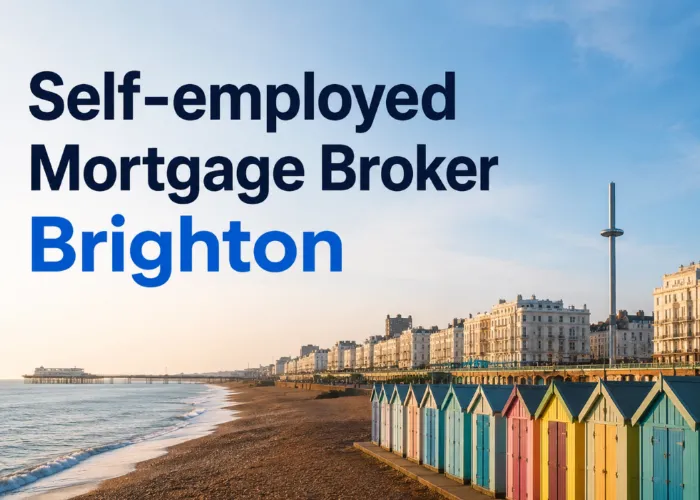
Self-employed mortgage broker Brighton
Find your perfect mortgage
Whole-of-market advice from a qualified broker — we search every lender to find your best deal.
Posted on Google
 Chloe Stringer
Trustindex verifies that the original source of the review is Google.
⭐️⭐️⭐️⭐️⭐️ John was fantastic throughout the whole mortgage process. Professional, knowledgeable, and always happy to help. He made everything feel simple and stress-free. Would highly recommend John to anyone looking for a great mortgage broker!Posted on Google Jordan NichollsAbsolutely brilliant service from John from start to finish. As first-time buyers, the mortgage process could have been really stressful and confusing, but John made everything so straightforward and easy to understand. He was always available to answer any questions we had, explained everything clearly, and kept us updated throughout the whole process. John worked hard to find us the right mortgage and has been incredibly helpful, professional and supportive every step of the way. We genuinely couldn't have asked for a better mortgage advisor and would 100% recommend John to anyone looking for a mortgage. Thank you for all your help!Posted on Google
 Kath TonkynWe have known John since we bought our first rental in 2009 and he has guided and helped us all the way. He laid out a plan for us that this month will be fulfilled exactly as he said it would. He has never let us down and he is always there when we have needed him. Nothing is too much trouble. Great guy and a true proffessional. Thanks John for everything. You are truly the best.Posted on Google
 Louise HolmesWe have used Johns services a few times now, when remortgaging. John is extremely knowledgeable and always strives to find the best deal that works for you. His communication is excellent, he’s very friendly and explains thoroughly the best way for you to go forwards and we would highly recommend his services.Posted on Google
 ChristinaI honestly don’t know how I would have got through buying my first house without John. From the very beginning, he helped us work out what we could afford and get our Agreement in Principle sorted, but his help went way beyond just arranging the mortgage. While we were viewing houses, he was always happy to give his thoughts on whether an asking price seemed sensible and what we might want to offer. His experience and knowledge were incredibly valuable when we were trying to navigate something we knew very little about. Once we found our house, John made the whole process so much easier. He was incredibly quick to respond, explained everything clearly and was always happy to answer my many questions! What really impressed me was how much he handled himself. He dealt directly with the estate agent, solicitors and lender, meaning we weren’t constantly stuck in the middle passing messages around. If an issue came up, he’d often just sort it in the background and let us know there was an issue but it's resolved, rather than adding to our stress. John genuinely cares about his clients and it really shows. He’s friendly, incredibly knowledgeable and always made us feel like we were in safe hands. I couldn’t recommend him highly enough. Five stars doesn’t really do justice to how much he helped us!Posted on Google
 Kyle McCloreyAs a first-time buyer, I couldn’t have asked for a better mortgage broker than John. From our very first conversation, he was incredibly friendly and immediately put me at ease, making what initially felt like a daunting process feel straightforward and manageable. John’s communication was outstanding throughout. No question was ever too big or too small, and he always took the time to explain everything clearly and thoroughly. Thanks to his support, I was able to navigate the entire mortgage process with complete confidence. I never once felt stressed or under pressure, which made such a difference as a first-time buyer. His knowledge and expertise are second to none, and he was able to secure me a fantastic mortgage deal. I genuinely felt that he had my best interests at heart every step of the way. I can’t recommend John highly enough. If you’re looking for someone who is knowledgeable, approachable, and truly dedicated to helping their clients, he’s the person to go to. Thank you, John, for making such an important milestone such a positive experience!Posted on Google
 james foleyWe’re do I start I’m so glad I got recommended to John. He made getting a mortgage feel so easy and effortless. Every question I had to ask John he was so quick to get back to you. He made you feel like he couldn’t do enough. I can not thank him for making it feel personal like he knew us and wanted the best outcome. He also is one of the nicest person I have ever met. If I was going to recommend anyone it would 100% be John.Posted on Google
 VictoriaI am so grateful to have found John! He is an incredible broker and a genuinely lovely person who goes above and beyond. He makes no question seem like a silly question and has made a stressful process as simple as it can be. I would highly recommend John to everyone and can't thank him enough for his help :)Posted on Google
 abanoub alfonseWhen I arrived in the UK, I had only been here for 3 months. I was on a spouse visa, had very little UK employment history, and other mortgage advisers told us that getting a mortgage would be extremely difficult or even impossible. From the first conversation, John gave us confidence. He explained exactly what we needed to do and told us that the most important thing was getting my first few payslips and building my employment record. He had a clear plan from the start. What I liked most was how honest and straightforward he was. He always answered our questions, kept us updated, and made the whole process easy to understand. Nothing ever felt too much trouble. John didn't just help us get a mortgage. He advised us on properties, helped us understand what was a good purchase, guided us on what offer to make, and even helped us find solicitors. It felt like he genuinely cared about helping us buy the right home, not just getting the mortgage approved. In less than 4 months, John achieved what two other mortgage advisers told us was impossible. We now have a mortgage offer and are buying our first home together. The whole experience was smooth, professional and surprisingly stress-free. John was always there when we needed advice and support. If you are a first-time buyer, new to the UK, or have a complicated situation, I highly recommend speaking to John before anyone else. Thank you, John. You have helped us achieve something we never thought would be possible, and we will always be grateful.Posted on Google
 valeria raflaOutstanding Mortgage Broker – Truly Exceptional Service My husband and I cannot recommend John Everest at Everest Mortgage Services highly enough. As first-time buyers, we were told by two other mortgage advisers that getting a mortgage would be virtually impossible due to our circumstances. My husband, Aba, had only been in the UK for five months on a spouse visa, had a very limited UK credit history, and was still building his employment record. We were repeatedly told that lenders would not consider our application. From our very first conversation, John was different. Rather than focusing on the obstacles, he focused on finding solutions. He took the time to understand our situation, explain every stage of the process, and gave us honest, realistic advice from day one. What seemed impossible suddenly felt achievable. In less than four months, John successfully secured our mortgage offer. Throughout the entire journey, he was professional, knowledgeable, responsive, and incredibly reassuring. Every question was answered promptly, every concern was dealt with calmly, and we always felt that he genuinely cared about helping us achieve our goal. What impressed us most was that John didn't just act as a mortgage broker. He became a trusted adviser and mentor throughout the whole process. He guided us on property choices, helped us understand market values, advised on offer strategies, and ensured we didn't make costly mistakes as first-time buyers. His experience and insight were invaluable. Buying a home is often described as one of the most stressful experiences in life, but John made it the complete opposite. It was the most smooth, stress-free, and well-managed process we could have hoped for. We always felt supported, informed, and confident in the decisions we were making. Thanks to John's hard work, dedication, and expertise, my husband and I are now able to purchase our first home together. We genuinely believe this would not have happened without him. If you are a first-time buyer, have a complex case, are a foreign national, or have been told "no" elsewhere, speak to John before giving up. His knowledge, persistence, and commitment to his clients are second to none. Thank you, John. You have helped us achieve a dream we thought was out of reach, and we will always be grateful. 🏡⭐️⭐️⭐️⭐️⭐️ Valeria



John Everest
Qualified Mortgage Adviser & Founder
As featured in




FCA
regulated
Fully authorised & regulated
by the FCA
100%
independent
Whole-of-market access.
No lender ties
1000+
mortgages arranged
for happy clients
Running a successful business shouldn’t make getting a mortgage harder. Yet many freelancers, contractors, sole traders and limited company directors in Brighton find themselves rejected because a lender doesn’t assess their income in the right way. The mortgage isn’t usually the problem. It’s how your income is presented.
Many lenders offer the same mortgages to employed and self-employed applicants, but they apply different methods when assessing business income, retained profits, dividends or contract earnings.
At Everest Mortgage Services, we specialise in helping self-employed clients across Brighton secure mortgages that reflect their real affordability. As a whole-of-market mortgage broker in Brighton, we know which lenders are comfortable with different business structures and how to present your accounts clearly from the outset.
Whether you’re buying your first home, moving home, remortgaging or purchasing an investment property, we match your circumstances with lenders that understand self-employed income and present your application in the strongest possible way.
Takes under 3 minutes
Get your mortgage in principle
today
today
Find out how much you could borrow in minutes. No credit check, no commitment — just clear, honest mortgage advice.
Get my mortgage in principle
→
Free review · No credit checks · No obligation
Why self-employed people in Brighton often need a specialist mortgage broker
Being self-employed doesn’t stop you getting a mortgage. Proving your income in a way lenders accept is usually the bigger challenge. Whether you’re a sole trader, freelancer, contractor or limited company director, your income is often assessed differently from someone in salaried employment. That means the lender you choose can have a significant impact on the outcome of your application.
Brighton has a thriving self-employed community, with professionals working across creative, digital, hospitality, construction and professional services. At the same time, buying property isn’t cheap. The average house price in Brighton & Hove is around £406,000, (ONS, April 2026) making it even more important to maximise your borrowing potential.
A high-street lender may only consider your salary and dividends, average your profits over several years, or struggle to assess fluctuating income. If you’ve recently invested back into your business, changed trading structure or experienced a particularly strong year after a quieter one, your affordability may not look as strong on paper as it does in reality.
This is where a specialist self-employed mortgage broker can make a real difference. Rather than approaching lenders one by one, we identify those that are comfortable with your business structure and income profile. We help present your accounts correctly, explain what supporting documents are needed, and recommend lenders whose criteria genuinely match your circumstances.
Whether you’re newly self-employed with one year’s accounts, an established business owner, or a contractor paid on a day rate, getting the right advice from the start can improve your chances of securing a mortgage without unnecessary delays or rejected applications.
We search 1000's of mortgage deals across a large number of lenders, including...


How we turn self-employed income into mortgage approval
Step 1: Understanding Your Business Before We Recommend a Lender
Every self-employed business is different, and that’s where the process starts. Before discussing mortgage products, we take the time to understand how your income is earned, how long you’ve been trading, and how your business is structured. A freelancer with multiple clients, a contractor working on day rates, and a limited company director all need different lender strategies.
We’ve found that many clients come to us believing they’ve already been declined for the “wrong reasons”. In reality, their application was simply presented to a lender whose criteria didn’t suit their circumstances. Identifying that early can save weeks of frustration.
By the end of our initial conversation, you’ll know what lenders are likely to consider your application, what documents you’ll need, and whether there are any issues worth addressing before you apply.
Step 2: Preparing Your Documents Properly
Most delays don’t happen because documents are missing. They happen because they don’t tell the full story.
Before anything is submitted, we review your paperwork carefully. That includes SA302s, Tax Year Overviews, company accounts and any additional evidence a lender may request. If something is likely to raise questions with an underwriter, we’d rather deal with it now than after your application is submitted.
For limited company directors, we’ll also look at how your salary, dividends and business profits are reflected in your accounts, because different lenders assess these differently.
Our aim is to submit an application that gives the underwriter as few reasons as possible to come back with further questions.
Step 3: Matching You with the Right Lender
This is where specialist advice makes the biggest difference. Rather than searching for the lowest interest rate first, we identify lenders whose affordability criteria suit your business structure. Some are comfortable with one year’s accounts.
Others assess contractors using day-rate income. Some consider salary and dividends, while others may look more closely at company profits where their criteria allow.
Over the years, we’ve seen applications succeed simply because they were placed with the right lender from the outset instead of being submitted to the most recognisable bank. Getting that decision right at the beginning can make the entire process smoother.
Step 4: Managing Your Application Through Underwriting
Submitting the application isn’t the finish line. Underwriters often request additional information, particularly where self-employed income is involved. Because we’ve already reviewed your documents beforehand, many of these questions have already been answered before they arise.
If further clarification is needed, we deal directly with the lender and explain your circumstances in a way that aligns with their underwriting requirements. You won’t be left trying to interpret lender requests or explain complex accounts on your own.
Throughout the process, we’ll keep you updated so you always know what’s happening and what comes next.
Step 5: Ongoing Support After Your Mortgage Completes
Our relationship doesn’t end when you receive your mortgage offer. Many self-employed clients return to us when it’s time to remortgage, move home or expand their property portfolio. As your business grows, your borrowing options often change too, and we’ll review what’s available when the time comes.
Having someone who already understands your business can make future applications quicker and far less stressful than starting from scratch each time.
Read our reviews
Posted on GoogleChloe Stringer⭐️⭐️⭐️⭐️⭐️ John was fantastic throughout the whole mortgage process. Professional, knowledgeable, and always happy to help. He made everything feel simple and stress-free. Would highly recommend John to anyone looking for a great mortgage broker!Posted on GoogleJordan NichollsAbsolutely brilliant service from John from start to finish. As first-time buyers, the mortgage process could have been really stressful and confusing, but John made everything so straightforward and easy to understand. He was always available to answer any questions we had, explained everything clearly, and kept us updated throughout the whole process. John worked hard to find us the right mortgage and has been incredibly helpful, professional and supportive every step of the way. We genuinely couldn't have asked for a better mortgage advisor and would 100% recommend John to anyone looking for a mortgage. Thank you for all your help!Posted on GoogleKath TonkynWe have known John since we bought our first rental in 2009 and he has guided and helped us all the way. He laid out a plan for us that this month will be fulfilled exactly as he said it would. He has never let us down and he is always there when we have needed him. Nothing is too much trouble. Great guy and a true proffessional. Thanks John for everything. You are truly the best.Posted on GoogleLouise HolmesWe have used Johns services a few times now, when remortgaging. John is extremely knowledgeable and always strives to find the best deal that works for you. His communication is excellent, he’s very friendly and explains thoroughly the best way for you to go forwards and we would highly recommend his services.Posted on GoogleChristinaI honestly don’t know how I would have got through buying my first house without John. From the very beginning, he helped us work out what we could afford and get our Agreement in Principle sorted, but his help went way beyond just arranging the mortgage. While we were viewing houses, he was always happy to give his thoughts on whether an asking price seemed sensible and what we might want to offer. His experience and knowledge were incredibly valuable when we were trying to navigate something we knew very little about. Once we found our house, John made the whole process so much easier. He was incredibly quick to respond, explained everything clearly and was always happy to answer my many questions! What really impressed me was how much he handled himself. He dealt directly with the estate agent, solicitors and lender, meaning we weren’t constantly stuck in the middle passing messages around. If an issue came up, he’d often just sort it in the background and let us know there was an issue but it's resolved, rather than adding to our stress. John genuinely cares about his clients and it really shows. He’s friendly, incredibly knowledgeable and always made us feel like we were in safe hands. I couldn’t recommend him highly enough. Five stars doesn’t really do justice to how much he helped us!Posted on GoogleKyle McCloreyAs a first-time buyer, I couldn’t have asked for a better mortgage broker than John. From our very first conversation, he was incredibly friendly and immediately put me at ease, making what initially felt like a daunting process feel straightforward and manageable. John’s communication was outstanding throughout. No question was ever too big or too small, and he always took the time to explain everything clearly and thoroughly. Thanks to his support, I was able to navigate the entire mortgage process with complete confidence. I never once felt stressed or under pressure, which made such a difference as a first-time buyer. His knowledge and expertise are second to none, and he was able to secure me a fantastic mortgage deal. I genuinely felt that he had my best interests at heart every step of the way. I can’t recommend John highly enough. If you’re looking for someone who is knowledgeable, approachable, and truly dedicated to helping their clients, he’s the person to go to. Thank you, John, for making such an important milestone such a positive experience!Posted on Googlejames foleyWe’re do I start I’m so glad I got recommended to John. He made getting a mortgage feel so easy and effortless. Every question I had to ask John he was so quick to get back to you. He made you feel like he couldn’t do enough. I can not thank him for making it feel personal like he knew us and wanted the best outcome. He also is one of the nicest person I have ever met. If I was going to recommend anyone it would 100% be John.Posted on GoogleVictoriaI am so grateful to have found John! He is an incredible broker and a genuinely lovely person who goes above and beyond. He makes no question seem like a silly question and has made a stressful process as simple as it can be. I would highly recommend John to everyone and can't thank him enough for his help :)Posted on Googleabanoub alfonseWhen I arrived in the UK, I had only been here for 3 months. I was on a spouse visa, had very little UK employment history, and other mortgage advisers told us that getting a mortgage would be extremely difficult or even impossible. From the first conversation, John gave us confidence. He explained exactly what we needed to do and told us that the most important thing was getting my first few payslips and building my employment record. He had a clear plan from the start. What I liked most was how honest and straightforward he was. He always answered our questions, kept us updated, and made the whole process easy to understand. Nothing ever felt too much trouble. John didn't just help us get a mortgage. He advised us on properties, helped us understand what was a good purchase, guided us on what offer to make, and even helped us find solicitors. It felt like he genuinely cared about helping us buy the right home, not just getting the mortgage approved. In less than 4 months, John achieved what two other mortgage advisers told us was impossible. We now have a mortgage offer and are buying our first home together. The whole experience was smooth, professional and surprisingly stress-free. John was always there when we needed advice and support. If you are a first-time buyer, new to the UK, or have a complicated situation, I highly recommend speaking to John before anyone else. Thank you, John. You have helped us achieve something we never thought would be possible, and we will always be grateful.Posted on Googlevaleria raflaOutstanding Mortgage Broker – Truly Exceptional Service My husband and I cannot recommend John Everest at Everest Mortgage Services highly enough. As first-time buyers, we were told by two other mortgage advisers that getting a mortgage would be virtually impossible due to our circumstances. My husband, Aba, had only been in the UK for five months on a spouse visa, had a very limited UK credit history, and was still building his employment record. We were repeatedly told that lenders would not consider our application. From our very first conversation, John was different. Rather than focusing on the obstacles, he focused on finding solutions. He took the time to understand our situation, explain every stage of the process, and gave us honest, realistic advice from day one. What seemed impossible suddenly felt achievable. In less than four months, John successfully secured our mortgage offer. Throughout the entire journey, he was professional, knowledgeable, responsive, and incredibly reassuring. Every question was answered promptly, every concern was dealt with calmly, and we always felt that he genuinely cared about helping us achieve our goal. What impressed us most was that John didn't just act as a mortgage broker. He became a trusted adviser and mentor throughout the whole process. He guided us on property choices, helped us understand market values, advised on offer strategies, and ensured we didn't make costly mistakes as first-time buyers. His experience and insight were invaluable. Buying a home is often described as one of the most stressful experiences in life, but John made it the complete opposite. It was the most smooth, stress-free, and well-managed process we could have hoped for. We always felt supported, informed, and confident in the decisions we were making. Thanks to John's hard work, dedication, and expertise, my husband and I are now able to purchase our first home together. We genuinely believe this would not have happened without him. If you are a first-time buyer, have a complex case, are a foreign national, or have been told "no" elsewhere, speak to John before giving up. His knowledge, persistence, and commitment to his clients are second to none. Thank you, John. You have helped us achieve a dream we thought was out of reach, and we will always be grateful. 🏡⭐️⭐️⭐️⭐️⭐️ Valeria
Income structures we help across Brighton
Self-employed doesn’t mean the same thing to every lender. How your income is assessed depends on how your business operates. That’s why we don’t use a one-size-fits-all approach. We take time to understand how you earn, identify lenders whose criteria match your circumstances, and present your income in a way that gives your application the strongest possible chance of success.
1. Sole Traders
If you’re a sole trader, lenders will usually assess your net profit rather than your turnover. Many average your profits over the last two or three years, although some will place greater emphasis on your most recent trading figures where their criteria allow.
We’ve helped sole traders across Brighton secure mortgages after they assumed fluctuating profits or legitimate business expenses would prevent them from borrowing. Before recommending a lender, we’ll review your accounts, explain how your income is likely to be assessed, and identify any areas that could affect affordability before your application is submitted.
2. Limited Company Directors
Running a limited company often creates a disconnect between how successful your business is and how lenders assess your income. Many high-street lenders focus on salary and dividends, while some specialist lenders may also consider retained profits where their lending policy allows. If you’d like to explore this in more detail, read our guide to limited company mortgages.
We’ll look at how you’re paid, how long you’ve been trading, and your company’s financial position before recommending a lender. This is particularly valuable for directors who reinvest profits back into the business instead of drawing a higher personal income.
3. Contractors and Freelancers
Contract income isn’t assessed in the same way by every lender. Some are comfortable using day rates or contract values, while others prefer a longer trading history or additional evidence of ongoing work.
Whether you’re an IT contractor, consultant, designer, engineer or creative freelancer working across Brighton, we’ll recommend lenders that understand contract-based income and explain exactly what evidence is needed to support your application.
If you’re paid on a fixed-term or day-rate contract, you can also learn more about our contractor mortgages service. The goal is to present a clear, consistent picture of your earnings from the outset.
4. Partnerships and LLPs
Partnership income can be more complex, particularly where profits are shared differently between partners or vary from year to year.
We’ll review your partnership accounts alongside your individual income to understand how lenders are likely to assess affordability. Where additional explanation is needed, we’ll ensure it’s presented clearly before your application reaches an underwriter, helping reduce unnecessary questions and delays.
5. Newly Self-Employed or One Year's Accounts
One of the biggest misconceptions we hear is, “I need at least two or three years of accounts before I can get a mortgage.” That’s not always the case.
Several lenders are willing to consider applicants with just one year’s trading history, provided the business is performing well and the rest of the application is strong. We’ve helped newly self-employed clients explore these options by identifying lenders whose criteria fit their circumstances rather than waiting years unnecessarily.
If you’ve recently become self-employed after working in the same industry, that’s useful context too, and we’ll make sure it’s reflected in your application where relevant.
Your business structure shouldn’t limit your mortgage options. The key is applying to lenders that assess your income in a way that reflects how your business actually operates. That’s where specialist advice makes the difference. Rather than trying multiple lenders and hoping one says yes, we’ll identify the most suitable options from the outset and guide your application through every stage.
Trusted mortgage advice
Why choose Everest Mortgages?
Independent, whole-of-market advice from advisers who put you first — every time.
🛡️
Advisers you can trust
We're totally impartial and focused on finding the perfect mortgage to suit you — not the lender.
🔍
We search the market for the best deals
We work with all lenders, big and small, to give you exclusive access to a comprehensive range of mortgage rates.
🗓️
We work to your schedule
We're flexible to fit around you — evenings, weekends, whatever works best for your life.
✨
We take away the hassle
We deal with lenders on your behalf, so everything from paperwork to negotiation is completely stress-free.
🤝
We're supportive and friendly
Our highly experienced advisers make the entire buying process painless by taking all the work off your hands.
Brighton’s property market: What self-employed buyers need to know
Brighton’s property market presents opportunities, but it also places greater emphasis on affordability. According to the latest UK House Price Index, the average property price in Brighton was £406,000, while first-time buyers paid an average of £343,000. Mortgage-funded purchases averaged £410,000, highlighting the borrowing levels many buyers need to achieve (Office for National Statistics (ONS), April 2026).
For self-employed buyers, these figures matter because borrowing capacity often becomes the deciding factor. A 10% deposit on Brighton’s average first-time buyer property is around £34,300, while buying at the overall average price requires a deposit of approximately £40,600 before legal fees, survey costs and other moving expenses are taken into account (Office for National Statistics (ONS), April 2026).
Different areas create different lending considerations
One advantage of working with a local mortgage broker is understanding how Brighton’s housing stock can influence a mortgage application.
Kemptown and the Seafront
Regency conversions, period apartments and converted Victorian buildings remain popular. While these properties offer character, lease length, service charges and maintenance costs can affect lender choice. We review these factors alongside your affordability before recommending a lender.
Hanover and Elm Grove
Victorian terraces continue to attract professionals, growing families and many self-employed buyers who want to stay close to the city centre. Competition for well-presented homes can be strong, making an Agreement in Principle particularly valuable before you begin viewing properties.
Seven Dials and Preston Park
Larger family homes command higher price points, meaning affordability calculations become increasingly important. For self-employed applicants, selecting a lender that assesses business income appropriately can make a significant difference to the amount you can borrow.
Hove and Central Brighton
Purpose-built apartments, mansion blocks and modern developments appeal to buyers looking for excellent transport links and a coastal lifestyle. Some flats require additional lender checks, particularly where higher service charges or building-specific requirements apply, and we’ll identify any potential issues early in the process.
High Property Values Mean Preparation Matters
Brighton’s property market moves quickly, particularly for well-priced homes close to the city centre, Brighton Station and popular residential neighbourhoods. Having your income assessed correctly before making an offer can put you in a stronger position when competing with other buyers.
In our experience, the biggest obstacle for many self-employed applicants isn’t their income; it’s applying to a lender whose affordability model doesn’t reflect how they actually earn. By identifying suitable lenders from the outset, reviewing your accounts before submission and preparing your application thoroughly, we aim to reduce avoidable delays and improve the likelihood of securing a mortgage that fits your circumstances.
● Local case study
Helping a self-employed buyer secure a home in Brighton
The Challenge
A self-employed limited company director contacted Everest Mortgage Services after a high-street lender declined their mortgage application for a two-bedroom flat in Seven Dials, Brighton. Although the business had been trading successfully for several years, the client kept a low salary and reinvested much of the profit back into the company.
The lender assessed only their salary and dividends, leaving them unable to borrow enough to purchase the property they wanted.
How Everest Mortgage Services Helped
We reviewed the client’s company accounts, income structure and trading history to understand the full financial picture rather than relying on the previous lender’s assessment. After identifying lenders whose affordability criteria better suited limited company directors, we prepared the application with the supporting evidence needed to clearly explain the client’s income.
By presenting the case correctly from the outset, we reduced unnecessary questions during underwriting and gave the application the strongest possible chance of success.
The Outcome
The client received a mortgage offer from a lender whose criteria matched their circumstances, allowing them to move forward with the purchase of their property in Seven Dials, Brighton, without changing their business structure or postponing their plans.
Every self-employed mortgage application is different. Whether you’re buying a Regency flat in Kemptown, a Victorian terrace in Hanover, or a family home near Preston Park, matching your income with the right lender is often the key to a successful application. That’s exactly what we do at Everest Mortgage Services.
Book your free self-employed mortgage consultation
If you’re self-employed and planning to buy a home in Brighton, the right advice at the start can save you time, unnecessary applications and potential mortgage declines.
Whether you’re a sole trader, freelancer, contractor or limited company director, we’ll review your circumstances, explain how lenders are likely to assess your income, and recommend the options that best fit your situation. You’ll receive clear, expert advice with no obligation to proceed.
What you’ll get
- A free initial consultation tailored to your business structure.
- An honest assessment of your borrowing potential.
- Guidance on the documents you’ll need before applying.
- Recommendations on lenders that are well suited to self-employed applicants.
Get in touch by phone, email, WhatsApp or our online enquiry form to arrange a consultation at a time that works for you, including evening and weekend appointments where available.
John Everest
Qualified Mortgage Adviser & Founder
Book a free consultation with a mortgage expert
John is a CeMAP-qualified, whole-of-market mortgage adviser and Director of Everest Mortgage Services. With over 21 years in financial services, and a track record of 1,000+ mortgages arranged.
- 15-minute call, no commitment
- Whole-of-market, FCA regulated
- Clarity and confidence in your next move
14+
Years experience
1,000+
Mortgages arranged
FAQs
Frequently asked questions
Can I get a self-employed mortgage in Brighton with only one year's accounts?
Yes, it’s possible. While many lenders prefer two or more years of trading history, some are willing to consider applicants with just one year’s accounts if the business is performing well and the rest of the application is strong. We’ll identify lenders whose criteria match your circumstances and explain what supporting documents you’ll need.
How do lenders assess income for self-employed applicants?
It depends on how your business is structured. Sole traders are typically assessed using their net profit, while limited company directors are often assessed on salary and dividends. Some lenders also consider retained profits where their criteria allow. We’ll recommend lenders that assess your income in the most appropriate way for your circumstances.
I'm a freelancer in Brighton with fluctuating income. Can I still get a mortgage?
Yes. Fluctuating income doesn’t automatically prevent you from getting a mortgage. Many lenders assess your earnings over the last two or three years, while others place greater emphasis on your most recent trading figures. Presenting your income correctly is often just as important as the figures themselves.
What documents will I need for a self-employed mortgage application?
The exact documents depend on your business structure, but most lenders request SA302s, Tax Year Overviews, bank statements, proof of identity and, in many cases, business accounts prepared by an accountant. We’ll tell you exactly what’s required before your application is submitted.
I've already been declined by a high-street lender. Can you still help?
In many cases, yes. A declined application doesn’t necessarily mean you can’t get a mortgage. It may simply mean the lender’s affordability criteria weren’t suitable for your income structure. We’ll review what happened, identify any issues and recommend lenders whose criteria better fit your circumstances.
Can retained profits be used to get a self-employed mortgage in Brighton?
If you’re a limited company director, it depends on the lender. Many lenders calculate affordability using your salary and dividends, while others may also consider retained profits left in the business where their lending criteria allow. This can make a significant difference to how much you may be able to borrow. At Everest Mortgage Services, we’ll assess how your business is structured and recommend lenders that are best suited to the way you receive your income.
How much deposit do I need to buy a property in Brighton if I'm self-employed?
The minimum deposit depends on both the lender and the property, but many self-employed buyers purchase with 10% or more. Given Brighton’s property prices, a larger deposit may improve both your borrowing options and the mortgage rates available. We’ll explain what’s realistic based on your income and deposit.
Why should I use a specialist self-employed mortgage broker instead of applying directly to a bank?
Banks can only offer their own mortgage products and lending criteria. We compare lenders across the market and recommend those whose affordability assessments are best suited to your business structure and income. That can improve your chances of securing the right mortgage while avoiding unnecessary applications and delays.
Mortgage tools
Find out how much you can borrow
Use our free calculator to get an instant estimate based on your income — no credit check, no commitment.
💰
How much can I borrow?
Applicant 1
Applicant 2
💰
Your results
Director note: Limited company directors can use dividends or shares on net profits to obtain their affordability.
Enter your details for an accurate range.
Estimated borrowing
Low (4.5x)
£0
Medium (5x)
£0
High (6x)
£0
Need the maximum loan possible?
Specialist lenders may go higher.
Free consultation
Posted on GoogleChloe Stringer⭐️⭐️⭐️⭐️⭐️ John was fantastic throughout the whole mortgage process. Professional, knowledgeable, and always happy to help. He made everything feel simple and stress-free. Would highly recommend John to anyone looking for a great mortgage broker!Posted on GoogleJordan NichollsAbsolutely brilliant service from John from start to finish. As first-time buyers, the mortgage process could have been really stressful and confusing, but John made everything so straightforward and easy to understand. He was always available to answer any questions we had, explained everything clearly, and kept us updated throughout the whole process. John worked hard to find us the right mortgage and has been incredibly helpful, professional and supportive every step of the way. We genuinely couldn't have asked for a better mortgage advisor and would 100% recommend John to anyone looking for a mortgage. Thank you for all your help!Posted on GoogleKath TonkynWe have known John since we bought our first rental in 2009 and he has guided and helped us all the way. He laid out a plan for us that this month will be fulfilled exactly as he said it would. He has never let us down and he is always there when we have needed him. Nothing is too much trouble. Great guy and a true proffessional. Thanks John for everything. You are truly the best.Posted on GoogleLouise HolmesWe have used Johns services a few times now, when remortgaging. John is extremely knowledgeable and always strives to find the best deal that works for you. His communication is excellent, he’s very friendly and explains thoroughly the best way for you to go forwards and we would highly recommend his services.Posted on GoogleChristinaI honestly don’t know how I would have got through buying my first house without John. From the very beginning, he helped us work out what we could afford and get our Agreement in Principle sorted, but his help went way beyond just arranging the mortgage. While we were viewing houses, he was always happy to give his thoughts on whether an asking price seemed sensible and what we might want to offer. His experience and knowledge were incredibly valuable when we were trying to navigate something we knew very little about. Once we found our house, John made the whole process so much easier. He was incredibly quick to respond, explained everything clearly and was always happy to answer my many questions! What really impressed me was how much he handled himself. He dealt directly with the estate agent, solicitors and lender, meaning we weren’t constantly stuck in the middle passing messages around. If an issue came up, he’d often just sort it in the background and let us know there was an issue but it's resolved, rather than adding to our stress. John genuinely cares about his clients and it really shows. He’s friendly, incredibly knowledgeable and always made us feel like we were in safe hands. I couldn’t recommend him highly enough. Five stars doesn’t really do justice to how much he helped us!Posted on GoogleKyle McCloreyAs a first-time buyer, I couldn’t have asked for a better mortgage broker than John. From our very first conversation, he was incredibly friendly and immediately put me at ease, making what initially felt like a daunting process feel straightforward and manageable. John’s communication was outstanding throughout. No question was ever too big or too small, and he always took the time to explain everything clearly and thoroughly. Thanks to his support, I was able to navigate the entire mortgage process with complete confidence. I never once felt stressed or under pressure, which made such a difference as a first-time buyer. His knowledge and expertise are second to none, and he was able to secure me a fantastic mortgage deal. I genuinely felt that he had my best interests at heart every step of the way. I can’t recommend John highly enough. If you’re looking for someone who is knowledgeable, approachable, and truly dedicated to helping their clients, he’s the person to go to. Thank you, John, for making such an important milestone such a positive experience!Posted on Googlejames foleyWe’re do I start I’m so glad I got recommended to John. He made getting a mortgage feel so easy and effortless. Every question I had to ask John he was so quick to get back to you. He made you feel like he couldn’t do enough. I can not thank him for making it feel personal like he knew us and wanted the best outcome. He also is one of the nicest person I have ever met. If I was going to recommend anyone it would 100% be John.Posted on GoogleVictoriaI am so grateful to have found John! He is an incredible broker and a genuinely lovely person who goes above and beyond. He makes no question seem like a silly question and has made a stressful process as simple as it can be. I would highly recommend John to everyone and can't thank him enough for his help :)Posted on Googleabanoub alfonseWhen I arrived in the UK, I had only been here for 3 months. I was on a spouse visa, had very little UK employment history, and other mortgage advisers told us that getting a mortgage would be extremely difficult or even impossible. From the first conversation, John gave us confidence. He explained exactly what we needed to do and told us that the most important thing was getting my first few payslips and building my employment record. He had a clear plan from the start. What I liked most was how honest and straightforward he was. He always answered our questions, kept us updated, and made the whole process easy to understand. Nothing ever felt too much trouble. John didn't just help us get a mortgage. He advised us on properties, helped us understand what was a good purchase, guided us on what offer to make, and even helped us find solicitors. It felt like he genuinely cared about helping us buy the right home, not just getting the mortgage approved. In less than 4 months, John achieved what two other mortgage advisers told us was impossible. We now have a mortgage offer and are buying our first home together. The whole experience was smooth, professional and surprisingly stress-free. John was always there when we needed advice and support. If you are a first-time buyer, new to the UK, or have a complicated situation, I highly recommend speaking to John before anyone else. Thank you, John. You have helped us achieve something we never thought would be possible, and we will always be grateful.Posted on Googlevaleria raflaOutstanding Mortgage Broker – Truly Exceptional Service My husband and I cannot recommend John Everest at Everest Mortgage Services highly enough. As first-time buyers, we were told by two other mortgage advisers that getting a mortgage would be virtually impossible due to our circumstances. My husband, Aba, had only been in the UK for five months on a spouse visa, had a very limited UK credit history, and was still building his employment record. We were repeatedly told that lenders would not consider our application. From our very first conversation, John was different. Rather than focusing on the obstacles, he focused on finding solutions. He took the time to understand our situation, explain every stage of the process, and gave us honest, realistic advice from day one. What seemed impossible suddenly felt achievable. In less than four months, John successfully secured our mortgage offer. Throughout the entire journey, he was professional, knowledgeable, responsive, and incredibly reassuring. Every question was answered promptly, every concern was dealt with calmly, and we always felt that he genuinely cared about helping us achieve our goal. What impressed us most was that John didn't just act as a mortgage broker. He became a trusted adviser and mentor throughout the whole process. He guided us on property choices, helped us understand market values, advised on offer strategies, and ensured we didn't make costly mistakes as first-time buyers. His experience and insight were invaluable. Buying a home is often described as one of the most stressful experiences in life, but John made it the complete opposite. It was the most smooth, stress-free, and well-managed process we could have hoped for. We always felt supported, informed, and confident in the decisions we were making. Thanks to John's hard work, dedication, and expertise, my husband and I are now able to purchase our first home together. We genuinely believe this would not have happened without him. If you are a first-time buyer, have a complex case, are a foreign national, or have been told "no" elsewhere, speak to John before giving up. His knowledge, persistence, and commitment to his clients are second to none. Thank you, John. You have helped us achieve a dream we thought was out of reach, and we will always be grateful. 🏡⭐️⭐️⭐️⭐️⭐️ Valeria
Ready to find your perfect mortgage?
Get in touch today and one of our qualified advisors will be in touch to guide you through your options.
✓
Free, no-obligation advice
No cost to speak with a qualified adviser.
🔒
No credit checks
Your credit score won't be affected.
⚡
Fast response
We aim to get back to you within 2 hours.
🏛️
FCA regulated
Fully authorised and regulated by the FCA.