Quick Answer: Buy-to-Let Mortgages in Shoreham-by-Sea
A buy-to-let mortgage in Shoreham-by-Sea is a loan used to purchase property that you plan to rent out rather than live in. Lenders usually require a 25%+ deposit, good credit history, and rental income that covers around 125–145% of the mortgage interest. Eligibility, rates, and borrowing limits vary by lender and are subject to affordability checks and lending criteria.
Introduction
Shoreham-by-Sea sits within Adur District Council, and much of the property investment activity focuses on the BN43 postcode areas, particularly around Shoreham station, Shoreham Beach, and Old Shoreham.
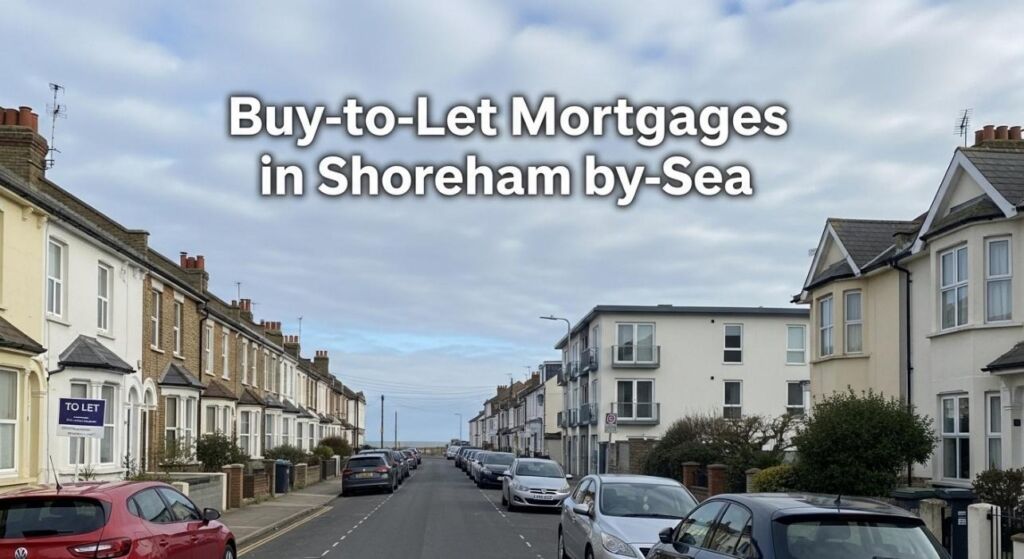
In Shoreham-by-Sea, Victorian terraces, riverside flats near the River Adur, and modern apartments near Shoreham railway station are commonly marketed to tenants.
The city is a popular coastal town with strong rental demand, but buy-to-let (BTL) mortgages can feel confusing at first. From eligibility rules to tax considerations and local rental hotspots, there’s a lot to take in, especially if you’re new to being a landlord.
Buy-to-let mortgages work differently from standard residential mortgages. Lenders look closely at rental income, your deposit, and your personal finances. On top of that, you need to factor in costs like stamp duty, letting agent fees, maintenance, and possible void periods.
However, once you understand how BTL mortgages work and what lenders expect, it becomes much easier to judge whether a property in Shoreham-by-Sea is a smart investment. Getting clear on the numbers from the start can help you move forward with confidence and avoid expensive mistakes.
What Is a Buy-to-Let Mortgage?
A buy-to-let (BTL) mortgage is a loan used to buy a property you plan to rent to tenants rather than live in yourself. Some landlords purchase property in their personal name, while others invest through a company structure such as a limited company buy-to-let mortgage.
The main goal is to earn rental income and, hopefully, see the property grow in value over time. It’s different from a normal residential mortgage in a few important ways:
- How lenders assess you: With a residential mortgage, lenders mainly look at your salary. With a BTL mortgage, they focus heavily on the expected rental income from the property. Your personal income still matters, but rent is key.
- Interest rates: BTL rates are usually higher than standard residential rates.
- Deposit: You normally need a bigger deposit, often 20–25% or more.
- Regulation: BTL mortgages have less consumer protection compared to residential ones.
- Fees: Arrangement fees and other charges can be higher.
This is general information to help you understand how BTL mortgages work. It’s not financial advice, and you should always speak to a qualified mortgage adviser before making any decisions.
What Is a Consumer Buy-to-Let Mortgage?
Not all buy-to-let mortgages are the same. In some cases, a loan may be classed as “consumer buy-to-let” (CBTL) rather than a standard investment BTL.
A consumer buy-to-let mortgage usually applies when someone becomes an accidental landlord. This might happen if you inherit a property, move in with a partner, relocate for work, or decide to rent out a home you previously lived in.
Unlike most investment BTL mortgages, consumer BTL loans are regulated by the Financial Conduct Authority (FCA) and follow rules introduced under the Mortgage Credit Directive.
Typical situations where a property might be classed as consumer BTL include:
- Renting out a previous main residence
- Letting out an inherited property
- Moving for work but keeping your old home as a rental
- Renting a property to family members
Key Benefits of a Buy-to-Let Investment
1. Rental Income
One of the biggest attractions is regular rental income. If the numbers stack up, the rent can cover your mortgage payments and potentially leave you with extra cash each month.
In Shoreham-by-Sea, rental demand is often strong. It’s popular with commuters heading to nearby cities, and people are drawn to its seaside location and local amenities. That demand can make it easier to find tenants compared to less connected areas.
2. Property Value Growth
Property values may rise over time, although prices can move up or down depending on market conditions. If your property increases in value, you could benefit when you decide to sell.
Shoreham-by-Sea has seen solid property demand over the years due to its coastal appeal and location. Of course, property prices can go up or down. Nothing is guaranteed but long-term growth is one reason many people consider buy-to-let.
3. Diversifying Your Investments
A buy-to-let property can spread your risk. Instead of having all your money in stocks or savings, property adds another type of asset to your portfolio.
4. A Possible Hedge Against Inflation
Property and rents often rise over time, especially during inflation. That means your rental income and property value may increase while the real value of debt reduces.
Before buying, look closely at Shoreham-by-Sea’s rental market. Check average rents, tenant demand, property prices, and the types of homes that rent quickly. The right area and property type can make a big difference to your returns.
Am I Eligible? Typical Buy-to-Let Lender Criteria
If you’re thinking about a buy-to-let mortgage, lenders will check a few key things before saying yes.
- Minimum income: Many lenders want you to earn at least £20,000–£25,000 a year. This shows you can cover payments if the property is empty.
- Own your own home: Most lenders prefer you to already own a residential property. First-time buyers may have fewer options.
- Age limits: Usually minimum age is 21. Maximum age at the end of the term is often 75–85, depending on the lender.
- Rental income: Must cover 125%–145% of the mortgage interest. This is called ICR.
- Credit history: A good credit score improves approval chances. Minor issues may be accepted, but serious problems like recent CCJs or bankruptcy can lead to rejection.
- Number of properties: If you own multiple rentals, lenders will assess your full portfolio more closely.
These are general market rules based on guidance from the Financial Conduct Authority (FCA) and common lender criteria. Exact requirements vary by lender and are always subject to affordability checks and lending criteria.
Understanding Deposit & Loan-to-Value (LTV)
Buy-to-let mortgages are seen as higher risk than residential ones. Most lenders require around 25% deposit, although some may accept slightly lower or higher depending on the property, borrower profile, and rental income.
LTV is the percentage of the property price you borrow. If the property costs £400,000 and you put down £100,000 (25%), your loan is £300,000. That’s 75% LTV.
- Lower LTV (bigger deposit) usually means better interest rates.
- You’ll have more lender options.
- It reduces risk for the lender.
- It can increase your chances of approval.
Your LTV directly affects how much you can borrow and how competitive your deal will be. Before buying in Shoreham-by-Sea, work out the rental yield.
- Gross yield: Annual rent ÷ property price.
- Net yield: Annual rent minus expenses ÷ property price.
This helps you see if the numbers actually make sense.
The Role of Rental Income: Interest Cover Ratio (ICR)
One of the most important parts of a BTL application is the Interest Cover Ratio (ICR). ICR measures whether the expected rental income comfortably covers the mortgage interest payments. They want to make sure the rent is enough to handle repayments, even if interest rates rise. It’s a key affordability test.
Typical ICR rules:
- Around 125% for basic-rate taxpayers.
- Around 145% for higher-rate taxpayers.
Lenders also use a stress test rate, often between 5.5% and 8%, even if your actual rate is lower. This follows wider regulatory guidance on responsible lending.
Let’s say your mortgage interest payment is £800 per month. If the lender requires 125% ICR:
£800 × 125% = £1,000
So the property must generate at least £1,000 per month in rent to pass. If the rent is lower than that, you may need a bigger deposit or a cheaper property.
These rules are based on common lender practices and UK regulatory standards. They’re meant to protect both you and the lender. But remember, criteria vary, and speaking to a mortgage adviser can help you understand what’s realistic for your situation.
The Buy-to-Let Mortgage Application Process: Step by Step
1. Initial Research
Understand the basics of buy-to-let and your own financial situation. Set your budget, investment goals, and target property type. Use sites like Rightmove, Zoopla, and local estate agents to explore options.
2. Talk to a Broker
A specialist buy-to-let broker can show you the best products, rates, and lenders for Shoreham-by-Sea. They give tailored advice and access to deals you might not find on your own.
3. Get an Agreement in Principle (AIP)
This is a soft-check offer from a lender based on your finances. It shows sellers you’re serious and gives you confidence while house-hunting.
4. Property Search & Make an Offer
Look for suitable buy-to-let properties in Shoreham-by-Sea. Explore investment hotspots and hidden gems. Once you’ve done your homework, make an offer.
5. Full Mortgage Application
Submit a complete application with all required documents, including details about the property. Your broker will help ensure everything is correct and submitted smoothly.
6. Valuation & Underwriting
The lender values the property and checks your application thoroughly. Be ready to answer any questions or provide extra info if asked.
7. Mortgage Offer
If everything’s approved, the lender sends a formal offer with the terms and conditions. Review this carefully with your broker and solicitor.
8. Legal Work & Exchange
Your solicitor handles the legal side, including searches and exchanging contracts. Make sure all checks are completed before moving forward.
9. Completion
On completion day, the mortgage funds are released, ownership transfers to you, and you get the keys. Make sure insurance is in place and do final checks.
This simplified step-by-step process keeps everything practical and focused on Shoreham-by-Sea, making it easier for you to follow and plan your buy-to-let journey.
Buy-to-Let Mortgages in Shoreham-by-Sea: A Local Market Snapshot
If you’re looking at buy-to-let in Shoreham-by-Sea, it helps to understand which parts of town attract the most tenants. Not every street performs the same, and small location details can make a big difference to rental demand and long-term growth.
Central Shoreham (BN43 5xx)
Central Shoreham is popular for one big reason; convenience. It’s close to the train station, local shops, cafes, and the River Adur. This makes it attractive to commuters heading to Brighton or London, as well as young professionals who want everything within walking distance.
Two-bedroom flats and modern apartments near the station often see steady demand. These types of properties can be easier to rent out quickly, especially if priced correctly.
Shoreham Beach (BN43 6xx)
Shoreham Beach offers something different; coastal living. Properties here are popular with families and tenants who want waterside views or easy beach access. It has a quieter, lifestyle feel compared to the town centre.
Larger homes and well-presented properties can achieve premium rents. In some cases, holiday lets may also be an option, depending on the property and local rules. Long-term family rentals are also common in this area.
North Shoreham and Old Shoreham
These areas are more residential and peaceful. You’ll find more family homes, gardens, and access to good schools. That makes them attractive to long-term tenants who want stability.
Three-bedroom houses and family-sized properties tend to perform well here. Tenants often stay longer, which can reduce void periods.
Shoreham-by-Sea Property Market Data for BTL Investors
If you’re considering a buy-to-let in Shoreham-by-Sea, the numbers matter. Below is a simple overview of what investors should look at. Remember, these figures are averages and can change depending on the street, condition and market conditions.
Average Property Prices
Property prices in Shoreham-by-Sea typically sit around:
- Overall average: £459,659
- Flats: £266,659
- Terraced houses: £441,565
- Semi-detached homes: £486,884 (Right Move, 2025)
These figures give you an idea of the capital needed, the likely deposit (usually 25%+), and your potential mortgage size.
Average Rental Yield
Typical rental yields in coastal commuter towns such as Shoreham-by-Sea generally range between around 4.3–5.5%, depending on property type and purchase price. (LoopNet UK, 2025-26) Yields may be higher for smaller flats or HMOs and lower for larger family homes.
Rental Demand
Demand is often strong in commuter-friendly areas, although this varies by property type, condition, and market conditions. It generally depends on:
- Homes near the train station
- Family houses in quiet residential areas
- Well-presented two-bedroom flats
- Strong demand can mean fewer void periods and stable rental income.
Property Types in Demand
- 2-bed apartments
- 3-bed terraced houses
- 3-bed semi-detached homes
Choosing a property that’s already popular with tenants reduces risk.
Commuter Links
Shoreham-by-Sea benefits from the A27 and Shoreham train station. This attracts tenants working in Brighton, Worthing, and even London, helping maintain a steady tenant pool.
Local Amenities
The beach, riverside walks, shops, restaurants, schools, and watersports all add to the town’s appeal. Good amenities can support higher rents and longer tenancies.
EPC Requirements
Energy efficiency rules for landlords are evolving. The UK government is now targeting minimum EPC rating C for private rental properties by around 2030, with upgrade spending caps around £10,000 per property under current proposals. (UK government policy discussions and landlord guidance updates, 2026).
Rules may change, so landlords should monitor future government updates.
Ready to Take the Next Step?
If you’re serious about investing in Shoreham-by-Sea, don’t guess your numbers, get clarity. A local buy-to-let specialist can review your income, deposit, target property, and expected rent to see what’s realistically possible and which lenders may suit you best.
Speak to a local BTL broker about your numbers and find out what you could borrow today.
Frequently Asked Questions
1. How does a buy-to-let mortgage work in Shoreham-by-Sea?
It works much like any UK buy-to-let mortgage. The lender checks whether the rental income from the Shoreham-by-Sea property will comfortably cover the mortgage payments. Most landlords choose interest-only deals, meaning they pay the interest each month and repay the loan balance at the end of the term.
2. Who can get a buy-to-let mortgage in Shoreham-by-Sea?
Most lenders require you to:
- Be at least 21 years old
- Have a good credit history
- Earn a minimum income (often £20,000–£25,000+)
- Provide a deposit of at least 25%
3. How much deposit do I need for a buy-to-let mortgage in Shoreham-by-Sea?
You’ll usually need at least 25% of the property value as a deposit. Putting down more, such as 30% or 40% can help you access better interest rates and improve your chances of approval.
4. Are buy-to-let mortgages regulated in Shoreham-by-Sea?
Most buy-to-let mortgages are not regulated in the same way as residential mortgages, unless they are classed as “consumer buy-to-let.” This means there is generally less consumer protection, so it’s important to understand the risks before committing.